

Hammer Crusher Wear Parts: When to Replace and How to Choose
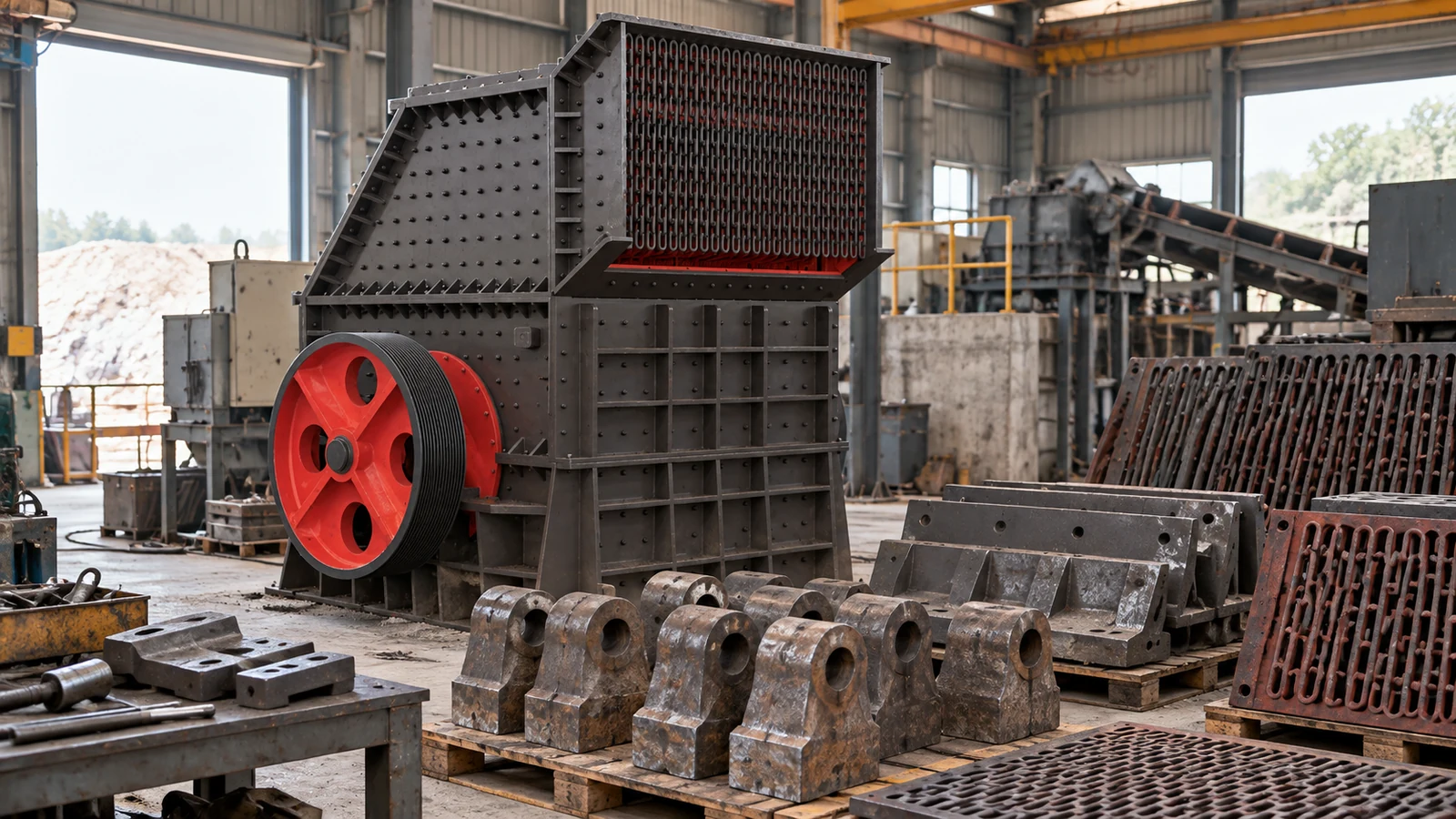
Hammer crusher wear parts should be inspected and replaced according to measured wear, the specific machine’s approved limits and changes in operating performance—not a universal operating-hour interval. For a heavy hammer crusher, checks commonly cover hammer heads, chamber liners and screen plates or grates where fitted, along with their mounting interfaces. Cracks, abnormal profile loss, loose attachments, changing product grading and unexpected vibration can justify further inspection, but none is sufficient alone to diagnose a part failure. When sourcing hammer crusher spare parts, buyers should confirm machine identity, drawing revision, dimensions, material requirements and permitted balancing arrangements before approving substitutes.
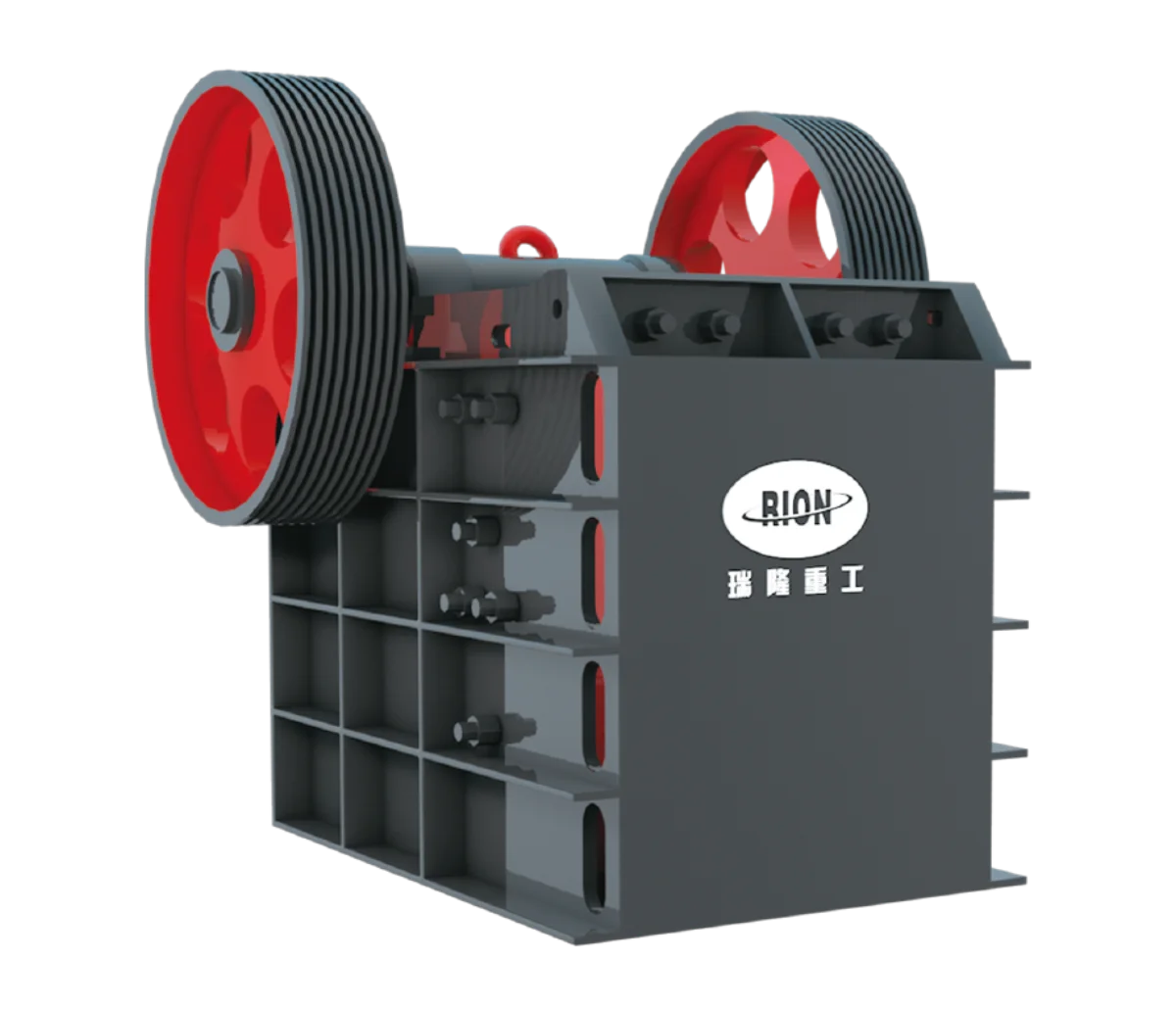
RION’s heavy hammer crusher information identifies the key wear components, while its crusher spare parts guidance emphasizes model matching and maintenance history. This guide connects wear diagnosis with safe maintenance planning and procurement.
What Are the Main Wear Parts in a Hammer Crusher?
Hammer heads and hammer assemblies
Hammer heads transmit impact energy to the incoming material. Their working faces gradually change shape as repeated impact and friction remove material. Severe asymmetry, fractures or loss of usable profile may affect rotor balance or impact action. However, inspection criteria must match the specific hammer design: cast, forged, fixed and swinging arrangements do not all use the same mounting or wear limits.
Associated pins, shafts, retaining elements and contact interfaces may also require inspection, even if they are not sold under the same wear-part category. A replacement hammer that appears visually similar may have a different mass distribution or mounting arrangement.
Crusher liners and impact surfaces
Liners protect parts of the chamber from direct impact and abrasive contact. Uneven wear may suggest an unusual material path, localized impact or operation outside the expected conditions. Check the retained thickness, fasteners, seating surfaces and any cracks against the equipment documentation. Replacing a liner without investigating abnormal local damage may allow the same issue to recur.
Screen plates and associated wear components
On hammer crushers equipped with screen plates or grates, these components help determine what particle sizes can leave the crushing zone. Aperture enlargement, blocked openings and damaged plate sections can affect grading or discharge. Not every hammer crusher uses an identical screen arrangement, so the relevant parts list should come from the actual machine.
What Causes Hammer Crusher Wear Parts to Wear Out?
Material hardness and abrasiveness
Hardness and abrasiveness affect wear in different ways. Hard particles can produce substantial impact stress, while abrasive minerals can progressively remove material from exposed surfaces. A high quartz content, for example, may present a different wear challenge from a relatively nonabrasive brittle feed. Do not choose a wear material from a single generic hardness label.
Feed size and impact conditions
Oversize feed or unexpectedly heavy pieces can alter the impact load carried by hammers and their mountings. Distribution across the rotor also matters: concentrated or uneven feeding may create a different wear pattern from uniform feeding. Review maximum lump size, feed variability, operating speed and chamber condition before attributing accelerated wear to poor spare-part quality.
Operating hours and maintenance practices
Operating hours are useful when combined with material throughput and measured wear. Hours alone omit changes in feed characteristics, periods of idling and changes to crusher settings. Use routine checks to record wear progression and investigate conditions that differ from earlier runs. Maintenance practices should follow the machine’s lockout, inspection and assembly requirements.
Uneven feeding and abnormal operating conditions
Unbalanced material distribution, foreign objects, loose mountings or obstruction near the discharge can contribute to irregular wear and vibration. These symptoms do not prove a single cause. First stop and secure equipment according to site safety procedures, then inspect the relevant components and process conditions.
How Feed Material Changes Hammer Crusher Wear
Hammer crusher hammer heads experience impact and abrasion at the same time, but the balance of those wear mechanisms changes with the processed feed. Relatively brittle material may fracture readily without imposing the same abrasive duty as a quartz-rich feed. Moisture and fines can also alter buildup or discharge behavior, making it important to record the real process conditions instead of choosing a replacement material from rock hardness alone.
For limestone and other quarry materials, compare the abrasiveness, maximum lump size, foreign-object risk and actual hammer wear pattern. A material selected mainly for abrasion resistance might not be appropriate where substantial impact toughness is required. When discussing crusher hammer replacement, request the approved material and heat-treatment specifications for the actual machine; do not assume that a harder alloy guarantees more operating hours.
When Should Hammer Crusher Wear Parts Be Replaced?
Visual checks and wear measurements
Inspect hammers for profile loss, cracks, deformation and unusual differences between positions. Check liner thickness and screen-plate condition where applicable. Record measurements from consistent reference points so the trend can be compared between inspections. The actual discard limit must come from the manufacturer’s documentation or an approved engineering assessment; a generic percentage of wear is not sufficient.
Output-size changes and operating symptoms
A shift in product grading, abnormal vibration, increasing blockage frequency or unexpected power behavior can justify an inspection. These are diagnostic clues rather than proof that a particular hammer or liner is worn. Screen condition, feed changes, incorrect settings and mechanical faults can produce overlapping symptoms, so operators should investigate before ordering replacement parts.
Use maintenance history to establish thresholds
Maintain a record of installation date, operating hours, processed material, inspection measurements, unusual events and the reason for replacement. When the history shows a stable wear trend under comparable conditions, it becomes easier to schedule inspections and discuss parts planning. Any threshold still needs to respect the approved machine-specific safety and replacement limits.
| Inspection item | What to record | Action if abnormal |
|---|---|---|
| Hammer working profile | Measured wear, cracks, difference between positions | Compare with model-specific limits and investigate uneven loading |
| Liner surfaces | Remaining thickness, fastener and seating condition | Check attachment integrity and replacement criteria |
| Screen plate or grate | Aperture condition, cracks, blockage and deformation | Inspect discharge and verify the correct plate design |
| Operating behavior | Vibration, output grading, abnormal noise and process changes | Investigate feed, settings and mechanical causes |
| Maintenance history | Hours, throughput context, fitted part reference | Update inspection and inventory planning |
How to Verify Hammer Crusher Wear Parts Compatibility
Confirm machine model and serial information
Begin with the exact machine identification, including series, model, serial number and any recorded rebuilds or modifications. A crusher family can contain multiple revisions with different rotor arrangements, mounting details or chamber dimensions. Ask for the model-specific parts drawing whenever available.
Check dimensions and installation interfaces
Verify overall dimensions, mounting-hole or pin geometry, contact surfaces, required clearances and the permitted mass or balance grouping. A wear part that fits through an opening is not necessarily interchangeable with the original. In a rotating hammer assembly, unintended differences in mass or attachment design can have serious operating consequences. Use the manufacturer-approved assembly and balancing instructions rather than improvising substitutions.
Match wear material to the crushing application
Wear materials must address both impact toughness and abrasive resistance under the expected duty. A material with high resistance to abrasion is not automatically the best option if the application also demands significant impact toughness. Material grade, heat treatment and permissible substitutions require confirmation against the original design and actual feed properties. Do not infer guaranteed service life from the alloy name alone.
Avoid common spare-part ordering mistakes
Buyers may assume that the same part name means the same geometry, copy dimensions from an old drawing without checking machine revisions, or send a photo without a scale. Avoid those errors by recording the current machine identification, comparing the used part with the approved drawing and documenting any previous engineering changes. For an urgent purchase, clarify what has actually been verified and what still requires measurement.
How to Compare Hammer Crusher Replacement Parts Before Ordering
Procurement teams should compare proposed parts against a shared verification list, even when two suppliers use the same product name. The checks below apply to hammer crusher liner replacement, hammer-head orders and screen-plate procurement, with additional rotor-balance requirements for rotating components.
| Comparison point | Buyer verification |
|---|---|
| Machine identity | Manufacturer, model, serial number and retrofit history |
| Geometry | Approved drawing revision, dimensions and mounting interfaces |
| Wear material | Documented grade, treatment and suitability for impact and abrasion |
| Rotor safety | Approved mass grouping, fastening and balancing method for hammer assemblies |
| Application | Material abrasiveness, feed lump size, moisture and process duty |
| Release to production | Compatibility approval and any required inspection or test documentation |
Photographs can support clarification, but they cannot replace dimensioned drawings or equipment-specific approval. Do not install an unverified substitute simply because its overall shape resembles the existing part.
How to Build a Practical Hammer Crusher Spare Parts Plan
Track installed sets and spare inventory
Create a part register for every crusher with the installed set, item identifiers, location, drawing revision, purchase source and number of usable spares. Separate parts waiting for inspection from approved inventory; otherwise, a store count may overstate what can be installed during a shutdown.
Prioritize according to downtime risk
Prioritize replacement parts using observed wear, the consequences of failure, availability and lead time. Critical items with long replenishment periods may justify earlier purchasing, while infrequently replaced parts may require a different inventory strategy. This is a planning framework rather than a claim that every site needs the same stock quantity.
Coordinate replacement with planned shutdowns
Schedule inspections before major shutdowns where practical. Confirm lifting arrangements, access, isolation procedures, necessary fasteners and approved assembly instructions before maintenance begins. If unexpected damage is found, obtain an engineering assessment rather than forcing installation to meet the original schedule.
What to Send a Hammer Crusher Wear Parts Supplier in an RFQ
| RFQ information | Useful detail | Reason for requesting it |
|---|---|---|
| Crusher identification | Manufacturer, model, serial number and machine revision | Locates the relevant parts configuration |
| Part reference | Original part number and dimensioned drawing when available | Supports compatibility review |
| Photographs and measurements | Multiple views with a measurement reference | Helps clarify geometry; does not replace drawings |
| Material and duty | Feed type, abrasiveness, lump size and operating pattern | Provides context for wear material selection |
| Order requirements | Quantity, delivery destination and planned installation date | Supports purchasing and logistics coordination |
RION’s published parts guidance calls for equipment-specific identification and maintenance records. Its product pages distinguish multiple crusher types, so procurement requests should name hammer crusher components specifically rather than relying on the broader term “crusher parts.” A supplier must still confirm each item against the correct configuration before treating it as interchangeable.
Hammer Crusher Wear Parts Support from RION
RION describes wear-part planning as part of aggregate plant operation, with inspection records and advance ordering of high-wear items. For purchasers working with a heavy hammer crusher, that creates a practical discussion: identify the relevant hammer, liner or screen-plate arrangement, describe the feed material and supply the current equipment records. A compatibility assessment should be made for the particular machine, not assumed for all crushers of a similar appearance.
Replacement Decision Examples for Hammer Crusher Wear Parts
Consider two hypothetical maintenance situations. In the first, a crusher shows gradual hammer profile wear, stable vibration and unchanged product grading. The response is to measure the hammer profile against the approved limits and plan an inspection or replacement based on condition. Operating hours alone do not justify a fixed replacement date.
In the second, a unit develops new vibration and a sudden grading shift after a feed change. That is a reason to stop safely and investigate feeding, screen condition, fasteners and rotor components before assuming a new set of hammers is the solution. An urgent hammer crusher wear parts order should follow diagnosis, not replace it.
When requesting hammer crusher spare parts from RION, buyers can provide the machine identification, existing part photographs, dimensioned drawings, installation records and intended duty. Any proposed replacement still needs to be checked for compatibility with the specific crusher configuration.
Choosing a Crusher Wear Parts Supplier for Long-Term Maintenance
A useful crusher wear parts supplier helps buyers establish compatibility, document part revisions and coordinate planned replacement windows. RION’s crusher spare parts page provides an appropriate procurement route for wear-part inquiries. Before purchasing, ask which checks are completed from the submitted drawing and what additional confirmation the supplier requires. The site does not establish that every third-party hammer crusher part is interchangeable with RION components.
Frequently Asked Questions
Are wear parts interchangeable between hammer crusher models?
Not automatically. Parts may differ in geometry, mounting, mass, material or design revision. Confirm the precise model and approved drawings, particularly for rotating assemblies.
Does harder material always cause faster hammer wear?
No single property predicts service life. Abrasiveness, particle shape, impact energy, feed distribution and wear-part material can all change the wear mechanism. Review the actual duty and wear history.
Can replacement parts be ordered without the original part number?
A preliminary inquiry can include the crusher model, serial information, photographs and measurements, but these may not be sufficient to authorize manufacture or installation. Obtain a verified drawing and compatibility confirmation before placing a final order.
Can hammer crusher wear parts be replaced on a fixed schedule?
Inspection can be scheduled at regular intervals, but replacement decisions should follow measured condition and the machine manufacturer’s approved discard limits. Hours alone do not capture changes in material abrasiveness, feed size or operating duty.
Final Replacement and Purchasing Considerations
The most reliable hammer crusher wear-parts plan combines measured inspections, an accurate parts register and model-specific compatibility checks. Use equipment history to anticipate replacements, but follow approved inspection limits and assembly instructions. If you are preparing a purchase, share your crusher identification, drawings and replacement requirements with RION for a parts discussion.