
What Is a Vibrating Screen? How Mechanical Screening Works
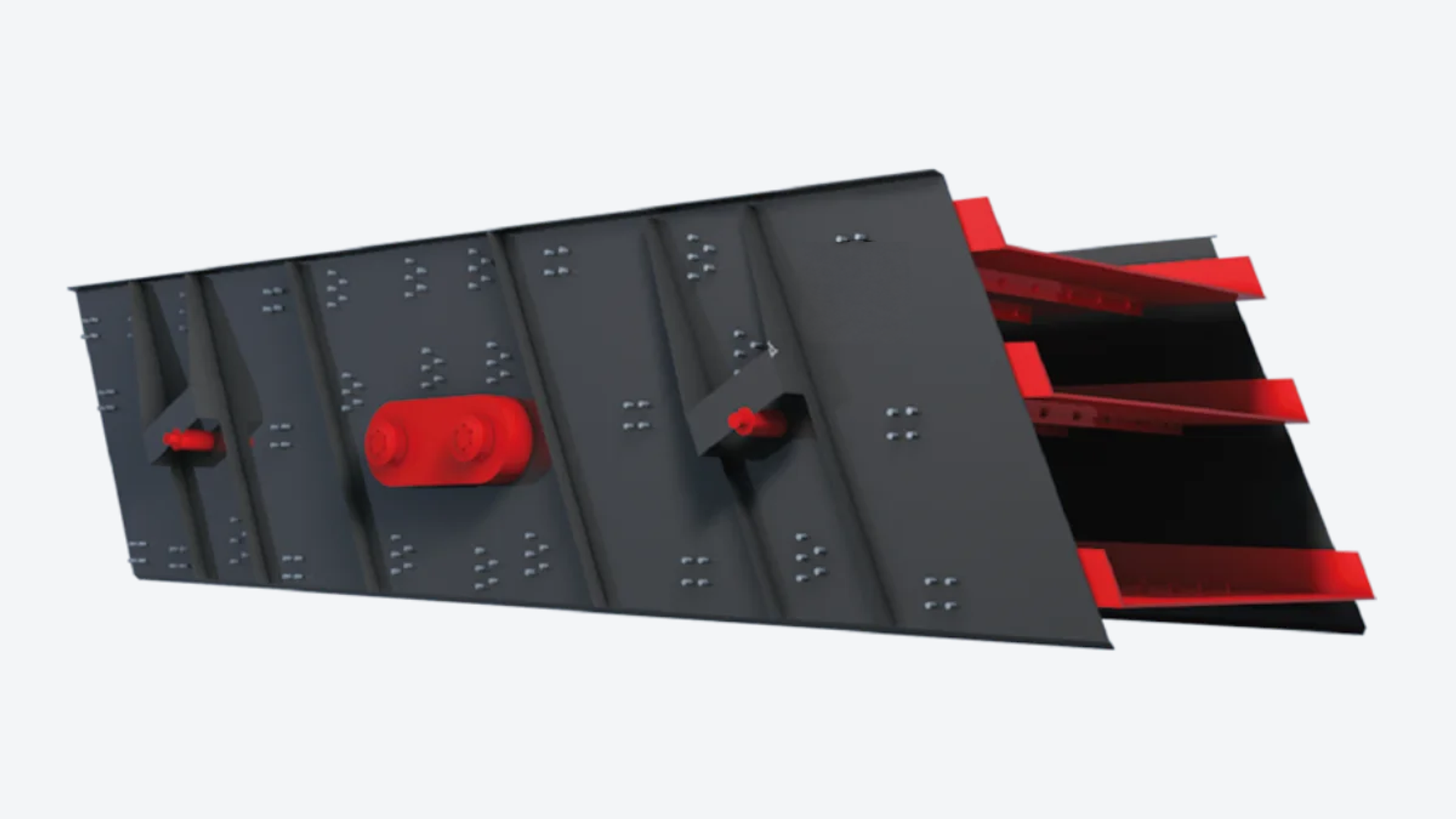
A vibrating screen is a machine that separates a flow of particles by size using a moving screening surface with openings. Vibration helps move material along the deck and allows smaller particles to work through the material bed toward the screen surface. Particles that pass through an opening enter the passing stream; those that remain on the deck leave in the retained stream. In aggregate plants, this process grades crushed stone, gravel and manufactured sand, or separates material for further crushing. Understanding the result requires following both streams: a screen opening describes the equipment, while the material leaving it shows what separation was achieved.
What Does a Vibrating Screen Do in Mechanical Screening?
Screening by Particle Size
Mechanical screening separates an existing mixture into size fractions. A crusher changes particle size; a screen directs particles into different process streams according to their passage through a screening surface.
Four terms help describe that movement:
| Term | Meaning in the screening process |
|---|---|
| Feed | Material entering the screen |
| Screen deck | One screening level within the machine, carrying its own screening surface |
| Passing stream | Material that travels through the openings in that deck |
| Retained stream | Material that leaves the deck without passing through it |
“Undersize” and “oversize” describe particles relative to a stated size boundary. Passing and retained describe where material goes. Keeping these meanings separate is useful when reading a flow diagram or interpreting a sample from a discharge conveyor.
Where the Screen Sits in a Crushing Circuit
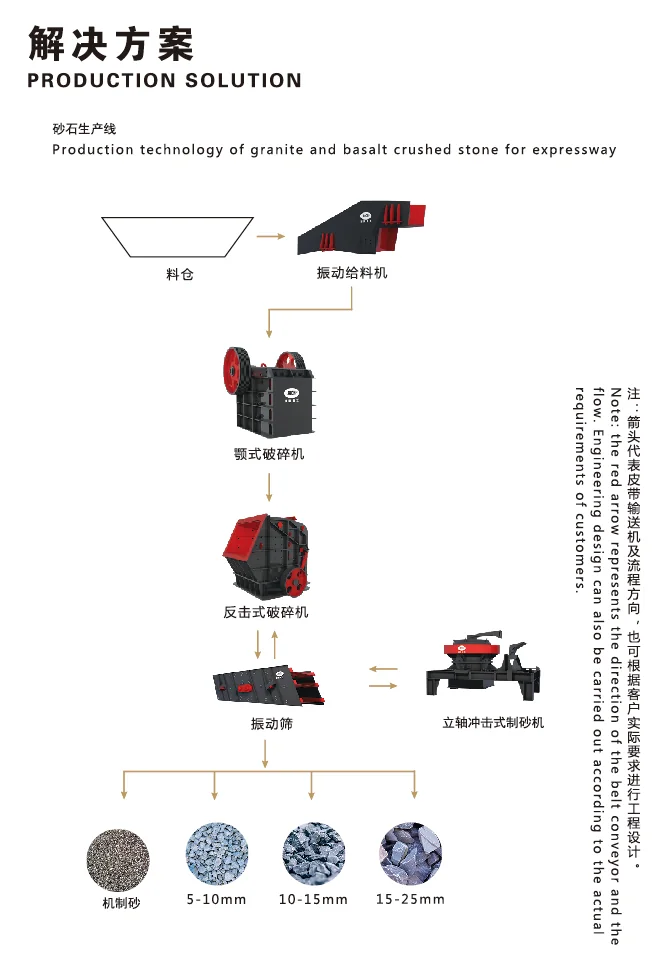
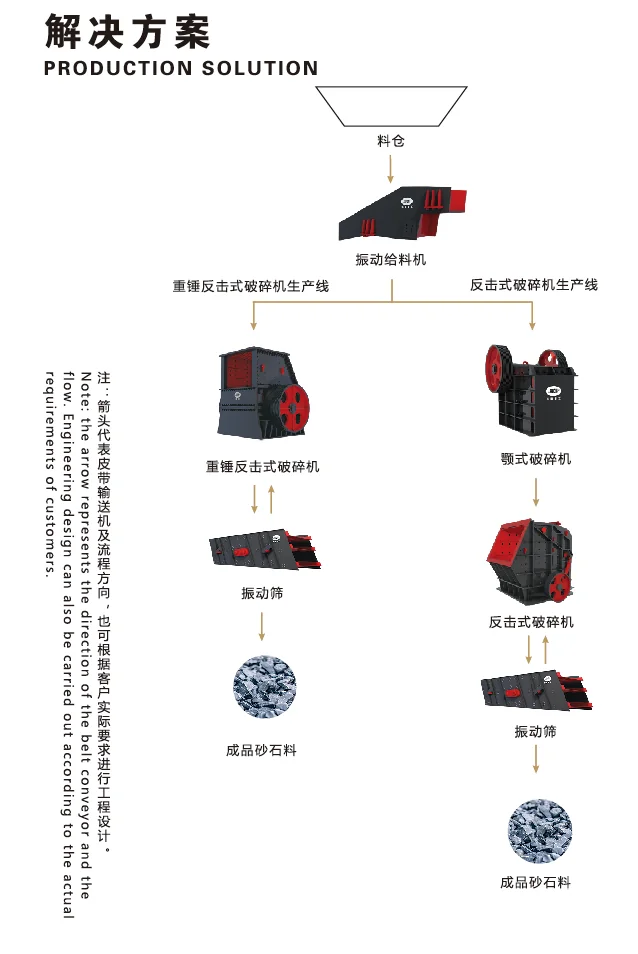
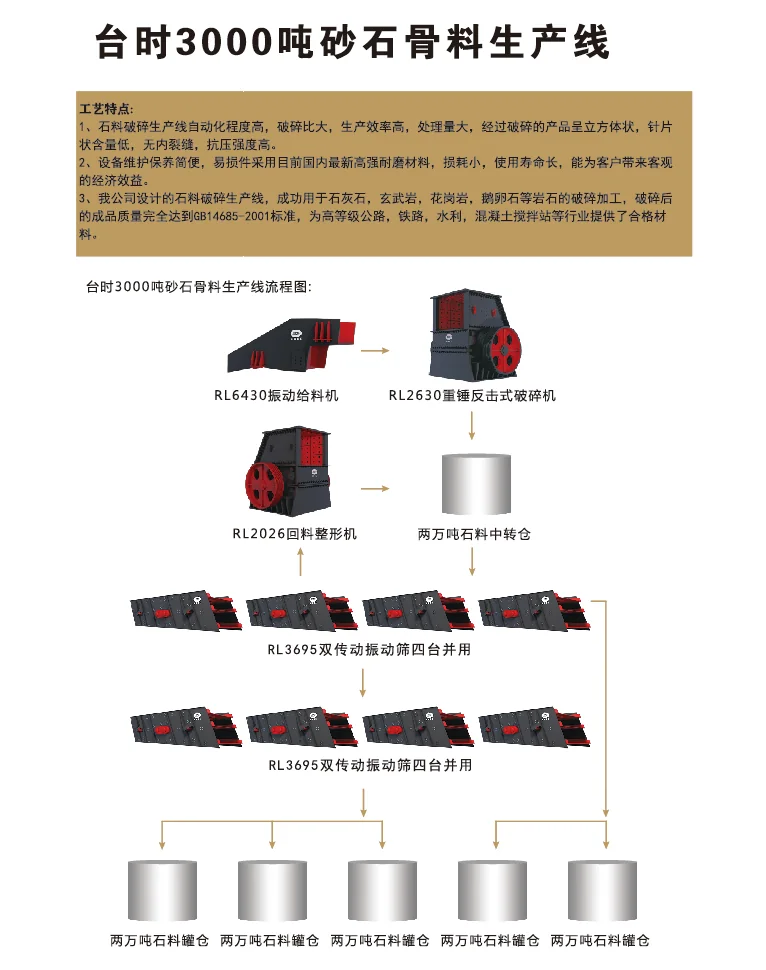
Aggregate screening equipment can work at several points in a processing plant. Ahead of a crusher, screening can remove material that already meets the next stage’s size requirement. After crushing, it can separate finished products or identify material for another reduction stage.
In a closed circuit, the selected return stream goes back for further crushing. Other streams continue toward subsequent processing or stockpiles. The plant flow diagram determines their destinations.
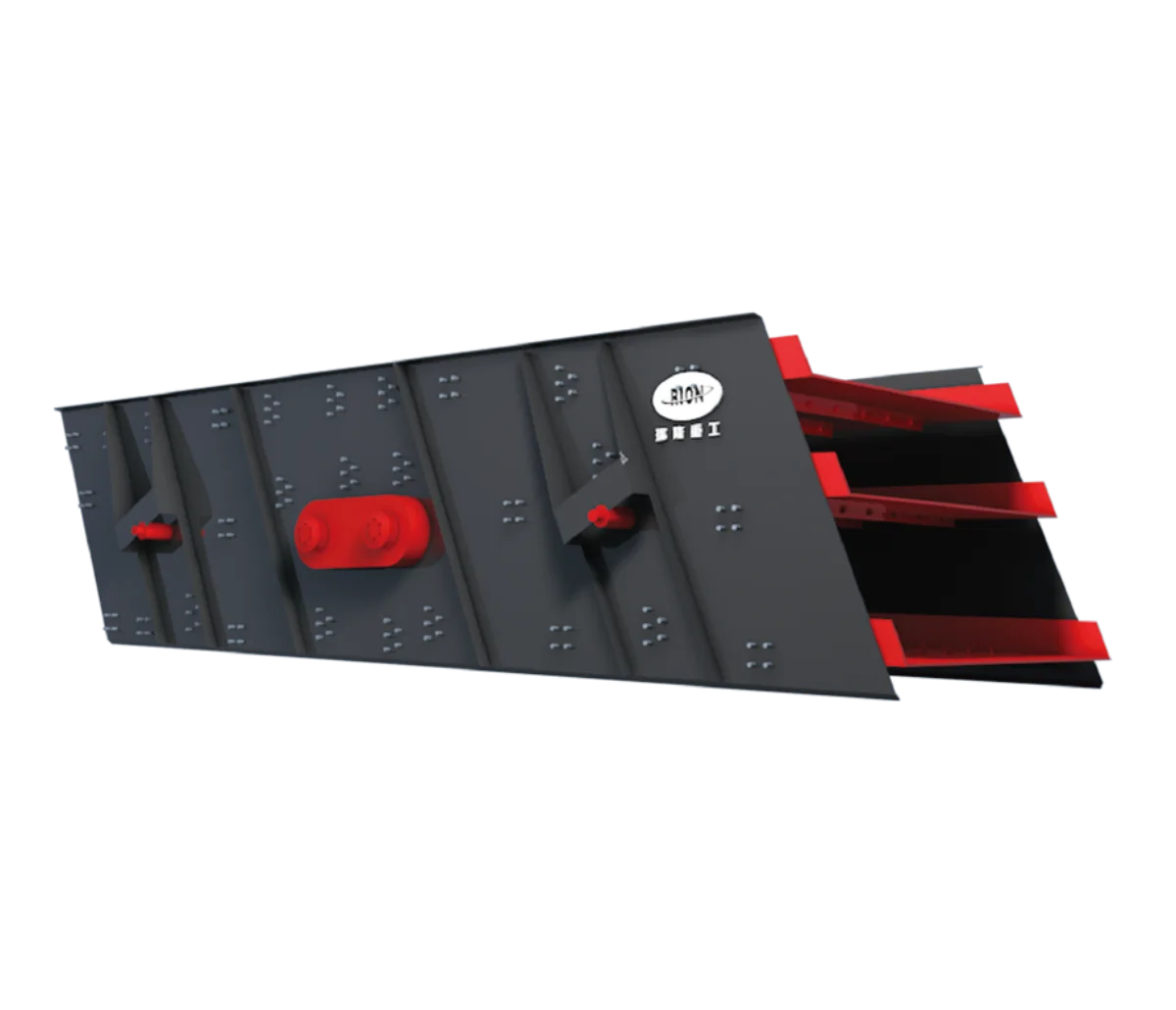
RION circular vibrating screens use multiple decks for aggregate classification and crusher-return screening. Other vibrating screens use different motion patterns and arrangements according to the application.
How Do Vibration and Screen Openings Separate Material?
Stratification and Particle Presentation
The screen box supports the screening surfaces, while an exciter produces the motion. In a circular-motion screen, the box follows a circular path, and material advances along the inclined screening surface. The screen mesh provides the openings through which separation occurs. On an inclined deck, gravity also assists travel toward the discharge.
Material arrives as a bed of mixed particles. A small particle near the top must reach the screening surface before it has an opportunity to pass. As vibration moves and loosens the bed, smaller particles can move through spaces between larger particles toward the bottom. This process is called stratification.
Stratification gives the screening surface access to particles that would otherwise remain covered. The process continues as material advances, rather than creating a permanently sorted stack of layers at the inlet.
Passage Through the Screen Apertures
Reaching the surface is only part of the process. A particle also needs to encounter an available opening in a suitable orientation. Consider an elongated stone: its ability to pass can change as it turns, even though the stone itself has not changed size.
Repeated movement creates further opportunities. Some particles pass early; others travel farther before passing or remain in the retained stream. Consequently, the retained discharge can contain particles smaller than the intended separation boundary.
How Do Screen Decks Create Aggregate Size Fractions?
Following the Passing and Retained Streams
In sand and gravel screening equipment, multiple decks can provide successive separations within one machine. In a typical arrangement, the upper deck makes a coarser separation and the lower deck receives material that has passed through it.
The following hypothetical two-deck arrangement illustrates the material routes:
| Material route | What happens next |
|---|---|
| Retained on the upper deck | Leaves through the upper retained discharge, for its assigned product or return duty |
| Passes through the upper deck | Falls onto the lower deck for another separation |
| Retained on the lower deck | Leaves through a separate retained discharge |
| Passes through the lower deck | Leaves through the lower passing discharge |
This arrangement produces three discharge streams. Whether they represent saleable coarse, intermediate and fine products depends on the grading requirements and the material actually collected. Each discharge must be assessed against its intended product grading.
Screen Aperture and Separation Size
An aperture is an opening in the screen media. Its nominal dimensions can be measured, but the installed surface also has thickness, opening shape and an inclination. Metso’s Crushing and Screening Handbook, seventh edition (2023), distinguishes the nominal opening from the effective opening available to passing particles.
The practical consequence is that aperture dimensions alone cannot describe the achieved separation. A product specification concerns the distribution of particle sizes in the discharge. Those sizes must be evaluated against the project’s grading requirements.
This distinction also prevents confusion between a production-screen aperture and the evaluation sieve used to describe a product. They serve different purposes and need not have identical nominal dimensions.
What Controls Screening Capacity and Separation Accuracy?
Feed Distribution and Bed Depth
A screen needs to distribute its work across the available surface. If most feed lands in a narrow band, that area carries a deeper bed while other areas receive relatively little material. The full deck width is then not contributing equally.
Throughput needs to be evaluated alongside material properties, process conditions and product goals. Two feed streams can have the same mass flow while presenting different separation tasks: one may contain mostly particles readily separated at the required cut, while the other concentrates material close to that boundary. This is why screening applications need a material description as well as a capacity target.
Moisture, Near-size Particles and Available Open Area
Particles close to the opening size generally need more favorable encounters than much smaller particles. Their share in the feed helps explain why a maximum lump size and a tonnes-per-hour figure are insufficient descriptions of the duty.
The following factors connect material behavior to the information needed to understand a result:
| Factor | Effect on the screening task | Relevant information |
|---|---|---|
| Feed particle-size distribution | Determines how much material requires each separation | Size fractions above and below the target cut |
| Moisture and clay | Can change adhesion and how freely particles move | Feed condition, including changes during operation |
| Particle shape | Affects the orientation needed to pass an opening | Flaky or elongated material in the feed |
| Media construction and open area | Changes how much screening surface consists of openings | Aperture dimensions, shape and media type |
| Feed rate and its variation | Changes the amount of material presented to the deck | Normal flow and fluctuations during the assessed period |
These conditions should be considered together when interpreting screening performance.
Two terms describe openings becoming unavailable. In McLanahan’s terminology, blinding commonly involves material adhering to the media, while pegging involves particles wedging in openings. Both reduce opportunities for other particles to pass. These mechanisms help explain performance changes, although the cause and appropriate response depend on the particular screen and material.
How Can You Check Whether a Screen Is Doing Its Job?
Define the Measured Stream and Size Cut
Begin with the question the measurement must answer. Product grading asks what size fractions are present in a discharge. Undersize recovery asks how much of the feed’s target undersize reached the intended passing stream.
Metso’s seventh-edition handbook distinguishes efficiency measures according to the stream of interest and evaluates them by individual deck. For undersize recovery, the relevant comparison is target undersize recovered in the passing stream divided by target undersize entering that deck.
Aggregate samples provide the size-distribution information needed for that comparison. ASTM C136/C136M-25, Standard Test Method for Sieve Analysis of Fine and Coarse Aggregates, covers determining aggregate particle-size distribution by sieving. It provides a method for evaluating material grading; it does not certify a vibrating screen or establish a universal machine-efficiency acceptance limit. Use the sampling, testing and grading requirements applicable to the project.
Read a Simple Undersize Recovery Example
Consider this hypothetical calculation for one screen deck. Assume steady operation, a common reporting period and a consistent dry-mass basis. The specified evaluation size is a sieve-analysis boundary; it is not assumed to equal the production-screen aperture. Here, t/h means metric tonnes per hour.
| Quantity | Assumed value |
|---|---|
| Feed dry-mass flow | 100 t/h |
| Feed fraction smaller than the specified evaluation size | 40% |
| Passing-stream dry-mass flow | 42 t/h |
| Passing-stream fraction smaller than the same evaluation size | 90% |
First, find the target undersize entering the deck:
100 t/h × 40% = 40 t/h
Then find the target undersize recovered in the passing stream:
42 t/h × 90% = 37.8 t/h
The undersize recovery is:
37.8 ÷ 40 × 100% = 94.5%
The 90% figure is the passing product’s proportion below the evaluation size, or undersize content. The 94.5% figure is the share of available target undersize recovered there. They have different denominators and answer different questions.
If material leaves only through the two deck discharges, the retained stream contains the remaining 2.2 t/h of target undersize:
40 − 37.8 = 2.2 t/h
Whether the separation is acceptable depends on the required recovery and product grading. The result applies to the assessed deck under these conditions.
What Information Makes a Vibrating Screen Specification Meaningful?
Read the Feed Conditions Alongside the Product Target
A useful specification for vibrating screening equipment connects the machine description to a defined separation task. Alongside deck count and screen media, it should identify:
- Feed particle-size distribution and material type.
- Normal feed rate and expected fluctuations.
- Moisture, clay and other relevant material conditions.
- Bulk density and the basis used to report flow.
- Required separation sizes and product grading limits.
- The destination of each discharge, including any crusher return.
These details make capacity and separation statements interpretable. They also show whether a later performance comparison concerns the same duty or a materially different feed and product target.
To relate that duty to RION’s circular vibrating screen range, discuss your screening requirements with the feed description, desired product grading and intended discharge routes. Those conditions give the equipment specification its practical meaning.